
CAD
An Art Student's Clash with the Digital Frontier

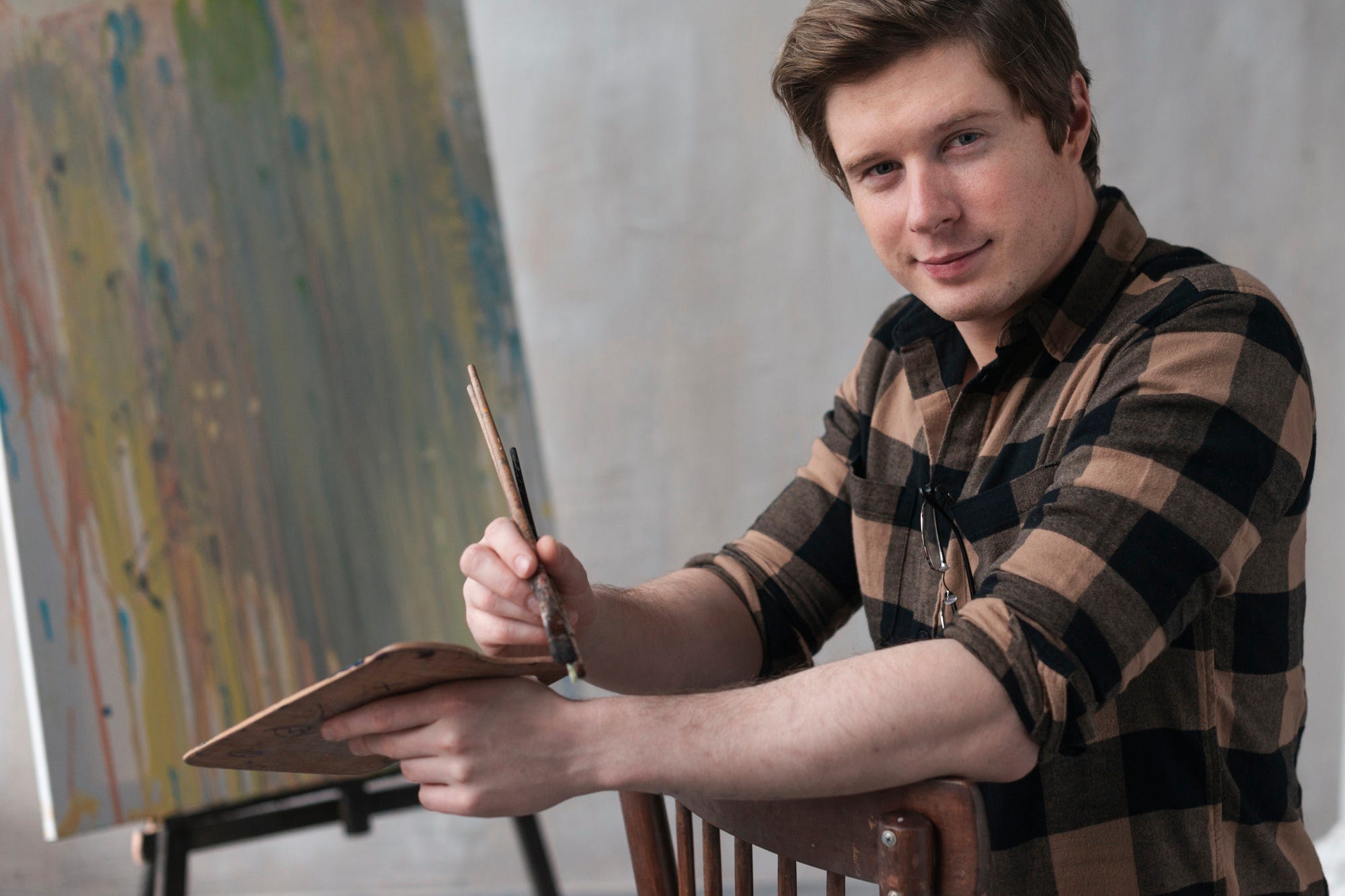
Martin was a student at a prestigious art school. His love was painting, but he was curious about other mediums. And so, he was rather looking forward to the upcoming class on computer-aided design, a class that he might not have taken if it were an elective but which he didn’t mind being required to take.
He found the first class meeting interesting and stimulating. But by the second week, he had run out of enthusiasm. In fact, he’d begun to hate what he internally dubbed the “terrible manipulations” made possible by computer programs. He knew that to fight CAD was pointless—like AI, like so much artifice and ease, it was here to stay. But it all upset him.
“Design programs are your friends,” the instructor beamed. “You can bet Matisse would have used them. Picasso. Rembrandt. You can bet on it.”
Martin made a face, but said nothing.
“They allow for infinite possibilities,” the instructor said.
Martin’s frown deepened.
“Any effect you want!” the instructed crowed. “Synthesis. Integration. Ideas that you can try out and discard in an instant. No messy cleanup. No fumes. Just endless innovation.”
“I don’t want that sort of help,” Martin said. He had only meant to say that to himself, but he realized that he had said it out loud.
He saw some nods of agreement. One student, a very bohemian girl, raised her fist in solidarity. But there were some rumbles of disagreement, too.
“Why not?” the instructor said.
Martin shrugged. “I think there must just be two camps, like with everything. Those that appreciate what CAD can do and those that don’t. I … I don’t like it.”
The instructor drew nearer. “Do you want to hear the names of some movies that have relied heavily on computer generated images?” he said. “Maybe you’ve heard of some of them? Star Wars. Jurassic Park. Toy Story. The Matrix. Spider-Man. Avatar. Inception. Gravity. Life of Pi. Heard of any of them?”
“I think you’re making my argument for me,” Martin said.
The instructor smiled. “I’m guessing you’re into painting?” he said. “Well, how will you support yourself? Top CGI engineers earn $180,000 a year. Wouldn’t that be nice? And you could paint whenever you liked.”
The instructor was clearly being sarcastic. But Martin took his point to heart.
“That makes perfect sense. I would understand any artist taking that route. Do you mind if I don’t?”
A few students applauded. The instructor made a face. “All right!” he said. “Let’s get back to learning what might interest some of the students here.”
Martin shook his head. There was really no reason for the instructor to be rude and insulting. Martin thought about walking out—but he found that he was also a little bit curious. What all could CAD and CGI do? Martin stayed, and paid attention.
GET YOUR COPY TODAY!
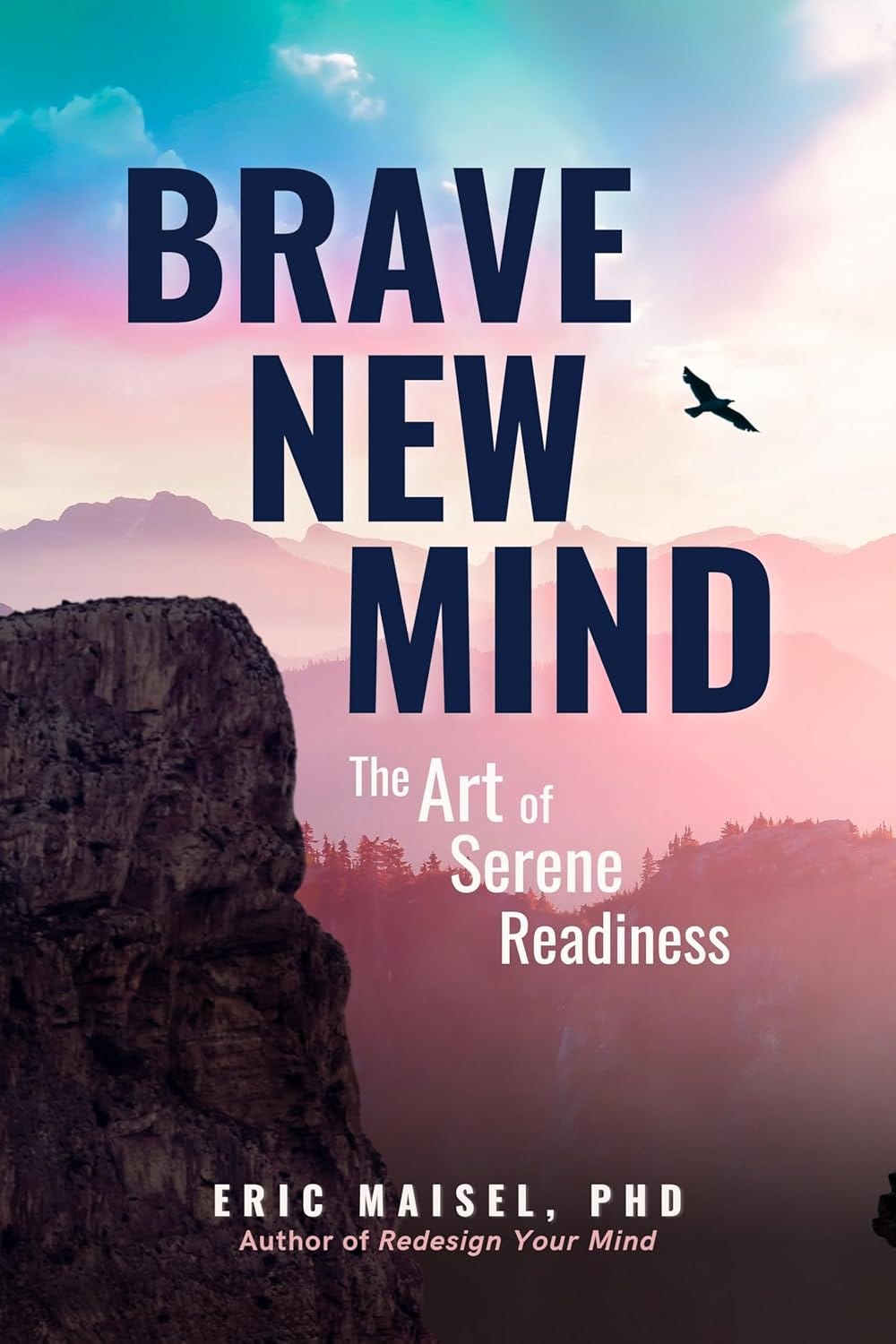
With Brave New Mind, Eric Maisel delivers a compelling and timely guide for navigating mental health in our anxiety‑fueled age. Its blend of clarity, depth, and usable tools creates a powerful toolkit—not just for surviving stress, but for forging a more calm, purposeful, and resilient way of living.
It’s not about seeking escape; it’s about crafting a mind equal to the demands of today. If you’re ready to face fear, anxiety, and uncertainty with presence and meaning, this is a book to lean into.

Thanks for reading Thinking Aloud! Subscribe for free to receive new posts and support my work.
For example, when it comes to A.I. getting involved in my writing for clarity, it most often wants to edit out the theme.
IT’S NOT THE MEDIUM; IT’S WHERE THE ART COMES FROM THAT MATTERS.
Let me ask you a question that will provide a clear perspective on art media. If you’ve finished a thrilling novel, a page turner, a story that you connected with, would it matter whether the author wrote it on a computer, a typewriter, by longhand or dictated the story into a recorder? It’s the content that matters, not the method of transcription. The same principle applies to a painting and the artist.
A creator goes beyond the limits of working outside the box, realizing that there is no box. I am not the object of a modifier—that is, I am not a digital artist, nor an oil artist, or a pastel artist, and so on. When I paint that is my medium; when I write that is my medium; when I walk the doggies that is my medium. You get the picture.
Patrons: It’s not the medium; it’s where the art comes from that matters. I am an intuitive channel in the Zen sense who in a leap of faith transcends thinking to access the divine fire of the Collective Unconscious: the wellspring of all great art.
Fine art digitally made is not the product of loading a paint app onto a computer, pressing a key, and then the app creates a work of original art. It is the sapient artist who creates with whatever gift and with whatever medium. It is the artist who makes art, not the media or computer, which are merely a tools.