Highly spiritual
Finding the Sacred in the Scrapyard


The film festival bustled with celebrities and a mass of humanity. The charming backstreets of this French coastal town teemed with visitors. You couldn’t go three steps without bumping into someone who looked as if they might be someone. People smiled a lot—even while complaining about the high prices of everything.
The German filmmaker Hans was present, in support of his latest film, which many thought was a shoo-in to win an award. This morning he found himself being interviewed by an eager young Frenchman who was, of course, also a budding filmmaker.
“This new film,” the interviewer began. “It’s very … what? How would you describe it?”
“I like to think of my films as highly spiritual,” Hans replied. “This one is no exception.”
Surprised, the interviewer continued, “But they typically take place in sterile office buildings, in factories, one was even set in a garbage dump? This one is set almost exclusively in a train yard among derelict trains. You’re calling them--”
“Yes, exactly,” Hans insisted, nodding. “Highly spiritual.”
The young man, raised on irony, laughed. “You’re pulling our leg, yes?”
Hans was indeed known for pulling a leg or two. But he insisted that today he wasn’t.
“No. Why?” he replied. “Couldn’t you feel the spirit in those old train cars?”
“Well, being out in nature, that’s spiritual, yes?” the interviewer persisted. “Everyone agrees about that. But office buildings? Garbage dumps? They seem the opposite of spiritual!”
“Hm,” Hans wondered. “What exactly is spiritual about nature? You mean bugs? Tsunamis? Trees being struck by lightning? That sort of thing? Quicksand? Red ants? Lions tearing at flesh? All of that is spiritual?”
“I know you’re pulling our leg!” the interviewer exclaimed. “I mean, you own a beautiful property by a river! It’s been featured in magazines! Gardens, outlooks—you can’t be serious!”
“Yes, we quite enjoy it there. Even though it isn’t the least bit spiritual.”
The interviewer laughed. “Yes, yes, of course. Have it your way!”
His film won the award it was expected to win. He continued making films, just about one a year for decades. They won more awards and found their small audiences.
When he died at the age of ninety-five and got to Heaven, God greeted him warmly. “Hans!” he cried. “How lovely to see you! I love your films! Maybe we can watch one of them this evening? That one with the trains? I have an angel who makes superb popcorn!”
Hans smiled. He hadn’t expected or needed any other-worldly validation, but it was always nice to receive a compliment.
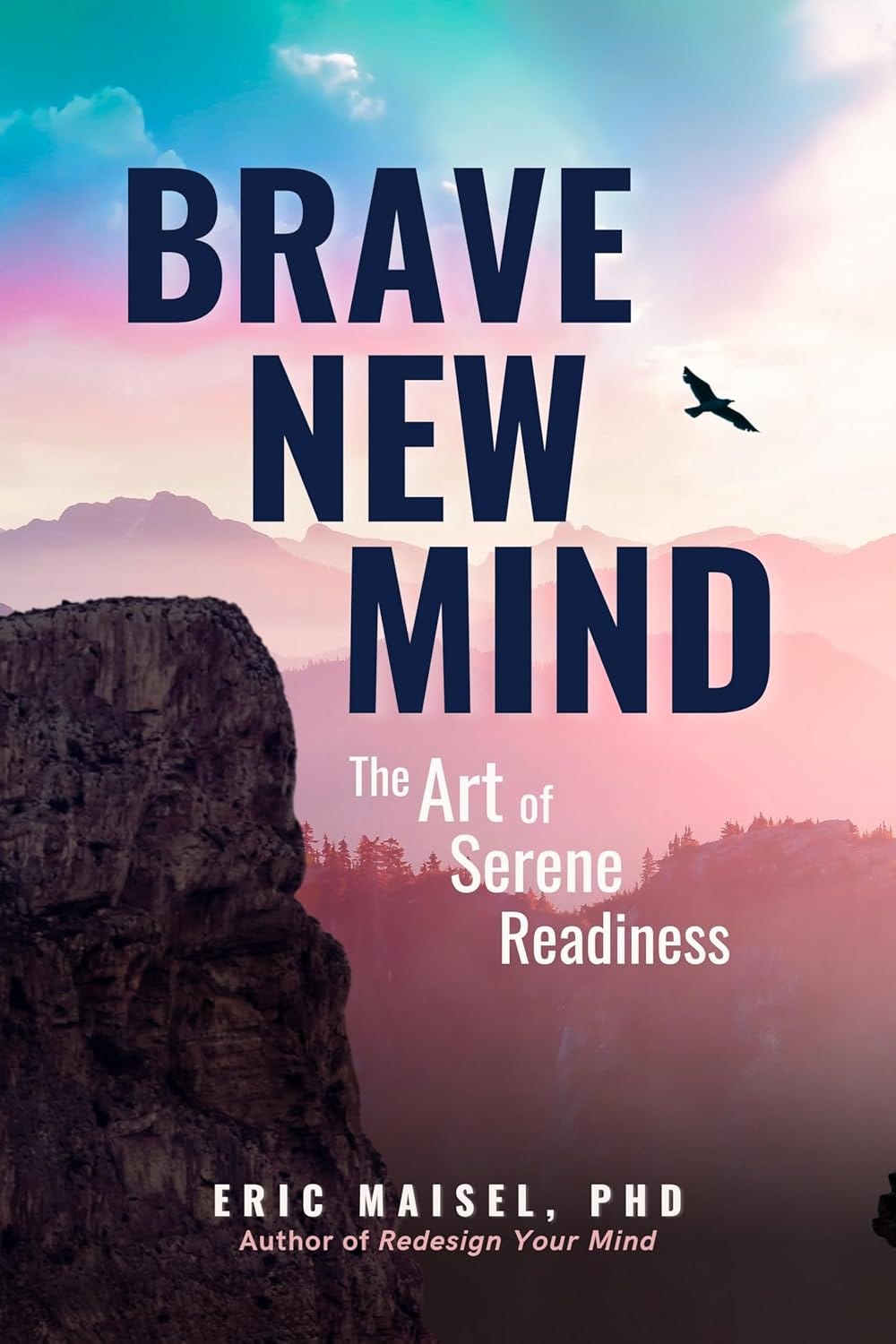
GET YOUR COPY TODAY!
With Brave New Mind, Eric Maisel delivers a compelling and timely guide for navigating mental health in our anxiety‑fueled age. Its blend of clarity, depth, and usable tools creates a powerful toolkit—not just for surviving stress, but for forging a more calm, purposeful, and resilient way of living.
It’s not about seeking escape; it’s about crafting a mind equal to the demands of today. If you’re ready to face fear, anxiety, and uncertainty with presence and meaning, this is a book to lean into.