It's Just a Game
Art, Economics, and the Surreal Reality of the Modern Market


“Creativity should help you make money, period. Using it to make a beautiful thing that can’t sell or that sells for peanuts is idiocy. What do people want? Games! That’s what they want. Games! Become a game developer—forget all this painting nonsense!”
David, a successful game developer, was lecturing his friend Anna, a struggling painter. Anna had traveled to Prague from the small town where she lived and painted to visit with David, to see the sights, and to get inspired. Now she wondered if being harangued by David in a café full of tourists was such a brilliant idea.
“Artists are ridiculous about economics. Look at that vendor selling ham out there on the square,” David said. “He has a goldmine and he exploits it. He posts a per gram price and tourists are flabbergasted to learn that the little bit of ham they just purchased cost them thirty dollars. They get angry—but they pay. All economics is like that! If you get the one great location in the one popular city square, you can charge anything; and people will complain online, but the money will be in your pocket.”
What could she say? David was objectively absolutely correct.
“Games!” he continued. “Entertainment! Stupid things! The stupider the better. What’s the old line? ‘Never underestimate the stupidity of the average person’? Tell me, does anyone really want your surrealist paintings? Sorry to be harsh—“
“Some surrealists have done quite well,” she heard herself say. How ridiculous! She regretted her response the instant she uttered it.
“Like Dali? Showmanship! The famous painters are the showmen, the hucksters, the true cynics. Andy Warhol. That polka dot painter. How could a polka dot painter become the world’s most revered artist? Doesn’t that make your head spin? It’s all about publicity, idiocy, the lowest common denominator … I should run a workshop!” He slammed the table. “And I would charge the most outrageous price imaginable for that workshop. Maybe $30,000 for a weekend. ‘Come invest in yourself! Come learn my secrets! Because a seven-figure artist in thirty days!’ My workshop would have a waiting list as long as your arm!”
Anna watched the people in the crowded square. They were all excited to see the famous clock chime and do its antics. They were all staring up, as if a meteor shower were coming, or aliens, or the end of the world. This was how they were spending their summer vacation.
“I completely agree with you,” Anna said. “People want games. They want that clock out there to go cuckoo. They want distractions, easy listening, paintings of summer cats and winter cats. You are completely right.”
“Exactly! Oh … I have to run. I’m flying off to a nice tax haven to buy a property I have my eye on. No taxes of any sort. Sunny every day. And I think I can get in on controlling its water supply. That’s where the money is!”
Anna smiled. “By all means,” she said. “Go for it.”
On the train ride back to her village, she had some very pleasant thoughts. As soon as she got home, she rushed to her studio. If there was ever a place and a time for surrealism, this was it.
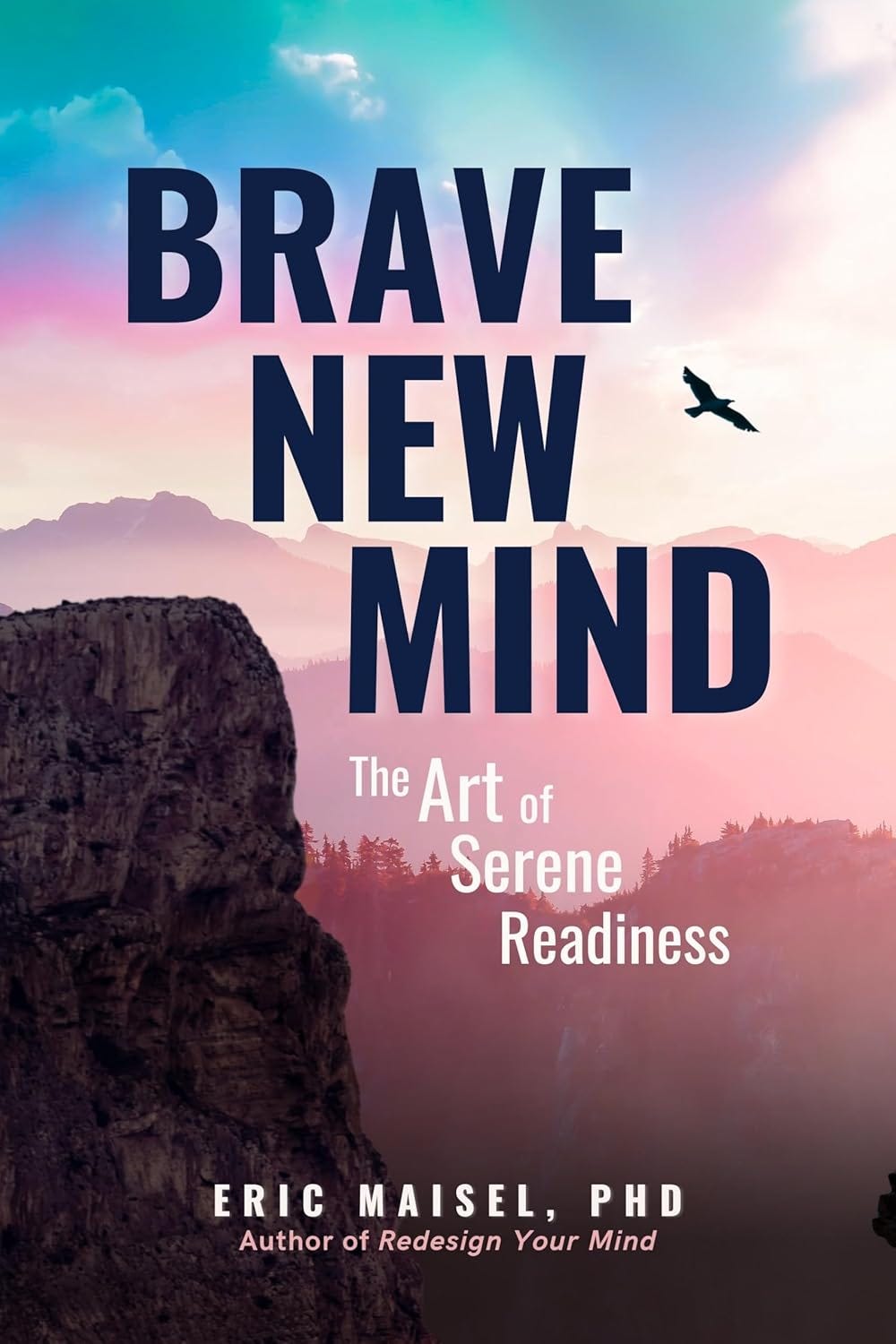
GET BRAVE NEW MIND TODAY!
AND THIS!