Many, Many Words
The Infinite Draft and the Art of Resistance


Barbara was chatting with her friend Marjorie, with whom she kept up casual contact. They had found themselves on two writers’ retreats together, one in Paris and one in Greece, and at the occasional online event. As it happened, Marjorie was in town, and so they met for coffee.
They had last seen each other in person the year before. At that point, Barbara had had many, many words done on her novel—so many that she’d been reluctant to announce the actual amount. Marjorie naturally inquired as to how the novel was going.
“Right now, I’m still writing,” Barbara replied. “At some point, I’ll edit.”
“But you have, what, a million words written already?” Marjorie laughed. “What an opus!”
“No, not that many. Maybe … half a million.”
“Barbara!” Marjorie exclaimed, taken aback. “What are you going to do with all those words?”
“Edit them.”
“But, when we talked last year in Greece, you seemed to be so close to having a draft done!”
“Well, the plot wasn’t making enough sense. There needed to be a few more scenes to help us understand the main character’s motivation. And the minor characters didn’t have enough breathing room. They felt pushed too far in the background.”
Marjorie couldn’t argue with that. How could she? It sounded so … plausible.
“I know what you’re thinking,” Barbara said. “That it’s taking a very long time. Maybe ‘too long.’ But a book takes as long as it takes. Victor Hugo spent seventeen years on Les Miserables. Proust spent fourteen years on In Search of Lost Time. Finnegans Wake took Joyce seventeen years. Ralph Ellison spent forty years on Juneteenth, trying to get the sequel to Invisible Man right. He never did—editors had to pull it together into something readable after his death.
Marjorie made a face. “Are these examples of something or cautionary tales? I mean, that Ralph Ellison story … that can’t be what you’re after? To have somebody pull your novel together after you’re gone?”
“Well, no. I’m just saying.”
“I know, but--”
“Lots of famous authors have taken a long time on their books!”
Their coffees had cooled, and so had the atmosphere. They found a few subjects to chat about—a cruise Barbara had been on, a medical procedure Marjorie had endured, some serious challenges faced by their children. They drifted toward the end of their time together, with neither making mention of staying in touch.
As they prepared to part, Marjorie thought that she ought to say to Barbara, “Good luck on your novel!” But somehow that felt like the wrong note upon which to end. Instead she said, “Be very well!”, and left the leave-taking at that.
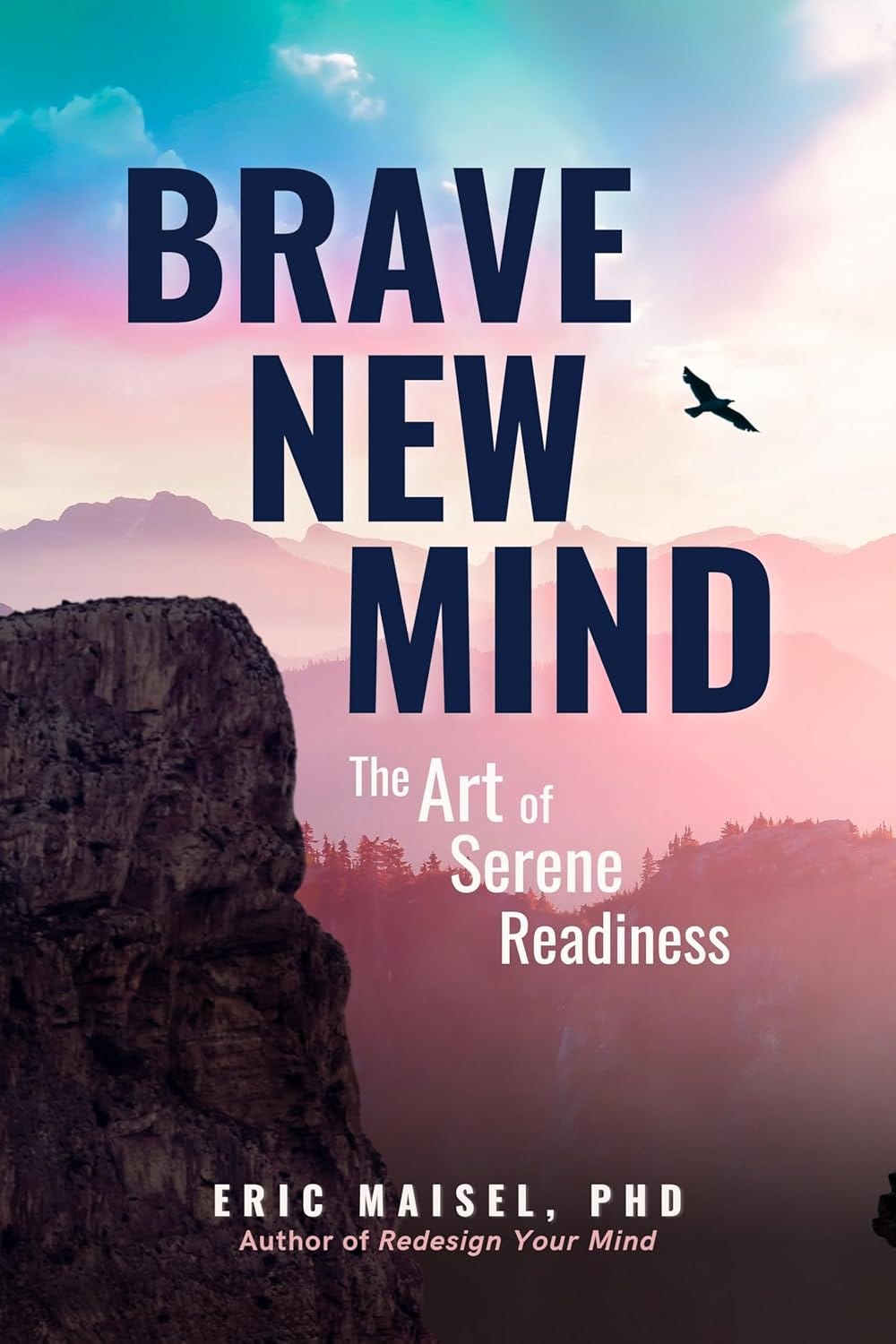
GET YOUR COPY TODAY!
With Brave New Mind, Eric Maisel delivers a compelling and timely guide for navigating mental health in our anxiety‑fueled age. Its blend of clarity, depth, and usable tools creates a powerful toolkit—not just for surviving stress, but for forging a more calm, purposeful, and resilient way of living.
It’s not about seeking escape; it’s about crafting a mind equal to the demands of today. If you’re ready to face fear, anxiety, and uncertainty with presence and meaning, this is a book to lean into.