
Preparing for the Crisis You Can’t Name - A Special Message from Dr. Eric Maisel
Why resilience, meaning, and psychological flexibility matter more than predictions, plans, or stockpiles

Hello, everyone:
If the coming global crisis could be named, identified, or timed, preparation would be straightforward. One would stock this, insure that, relocate here, exit there.
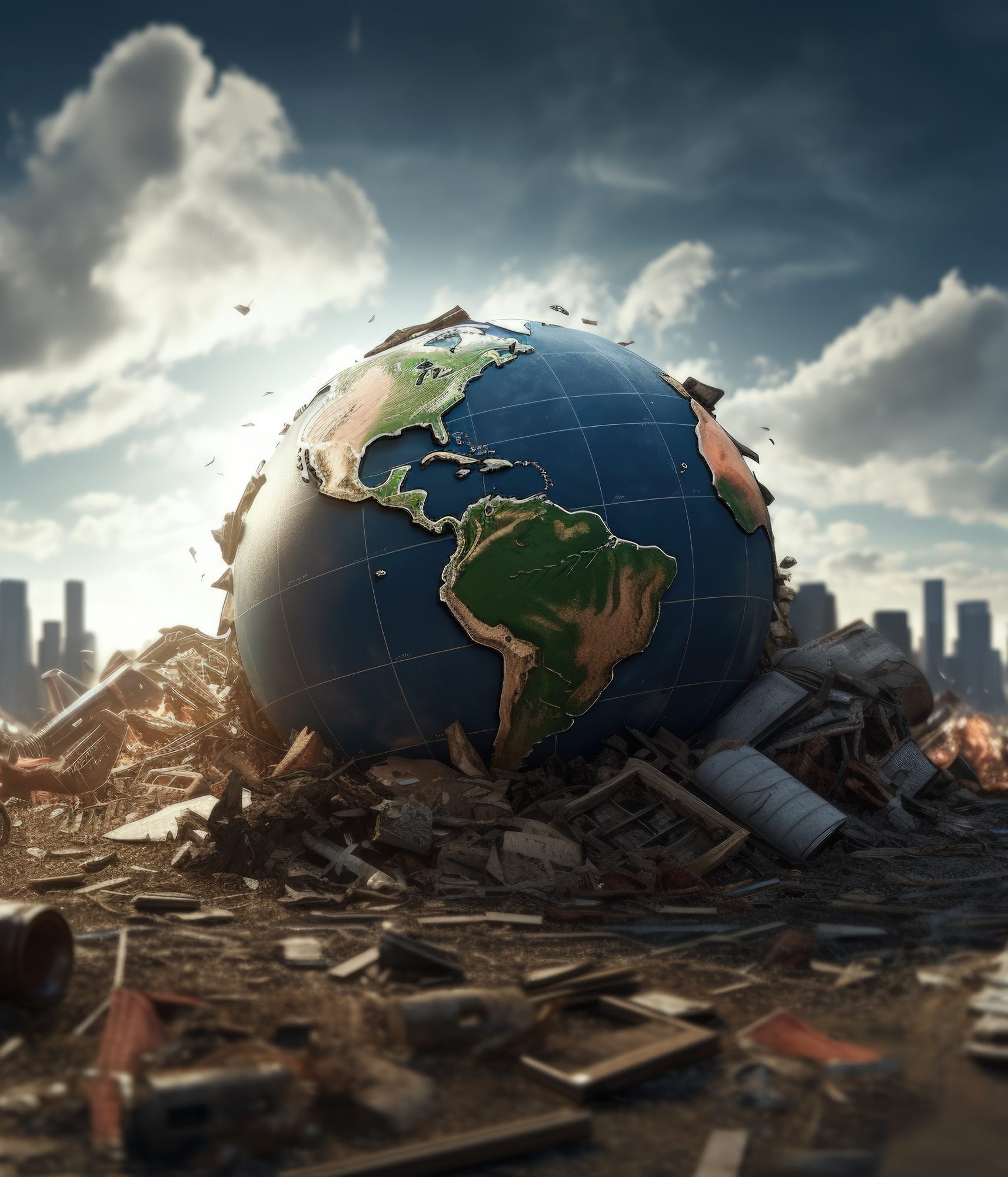
But the crisis many of us feel approaching resists all such specificity. It is more atmospheric than event-like, more a gathering instability than a single calamity. In such circumstances, traditional preparedness advice quietly fails.
You cannot prepare for what you cannot imagine. But you can prepare yourself.
The mistake people make is to prepare for scenarios rather than for conditions. They rehearse collapses, catastrophes, villains, and timelines. This does not produce resilience; it produces anxiety. The nervous system is trained for fear, not for functioning. A better approach is meta-preparation: cultivating the inner and outer capacities that allow a person to remain psychologically intact and practically useful under radical uncertainty.
The first of these capacities is psychological flexibility. When systems fail, plans fail with them, as do identities. People who are rigidly attached to a role, a worldview, or a moral narrative often experience collapse as a personal annihilation. Those who can revise their stories—about who they are, what matters, and how life is supposed to go—suffer less and act more. Flexibility is not passivity; it is the ability to adapt without self-betrayal.
A second capacity is emotional regulation. A global crisis may be less dangerous than the dysregulated people in the midst of it. Panic spreads faster than information. Despair erodes judgment. People who can steady themselves, think clearly, and tolerate distress becomes disproportionately valuable. In practice, this means learning how to downshift one’s nervous system, how to sit with fear without amplifying it, and how to act without certainty.
Third is meaning-making itself. In large-scale disruptions, inherited meanings fracture. Work may vanish. Futures evaporate. Moral frameworks strain. People who rely exclusively on socially supplied meaning—status, productivity, recognition—are left unmoored. Those who know how to construct provisional meaning, to say “this matters now, even if it may not matter later,” retain a reason to get up, help others, and continue.
Preparation also involves reducing dependence on brittle systems. This does not require withdrawal from society or apocalyptic fantasizing. It means noticing where one’s life rests on single points of failure: one income stream, one identity, one community, one sense of usefulness. Redundancy is not paranoia; it is quiet sanity. Multiple ways to contribute, to earn, to belong, and to care make a life less fragile.
Local ties matter more than abstract affiliations. In crises, help arrives from people who know your name, not from systems that know your category. You do not need a village; you need a handful of real relationships marked by mutual recognition and practical concern. Weak ties dissolve under stress. Strong ties carry weight.
Perhaps most importantly, one must practice living without guarantees. Most of us are trained—culturally and psychologically—to demand coherence, closure, and certainty. A coming unnamed crisis will offer none of these. The task, then, is to become comfortable with provisional answers, partial meanings, and temporary arrangements. “This works for now” is not a failure of philosophy; it is a survival skill.
In the end, the best preparation for an unnameable crisis is not stockpiling supplies or mastering predictions. It is becoming the kind of person who can remain human when structures fail: flexible, regulated, meaning-capable, locally connected, and unafraid of uncertainty itself. That kind of preparation is available now. And it does not depend on knowing what, exactly, is coming.
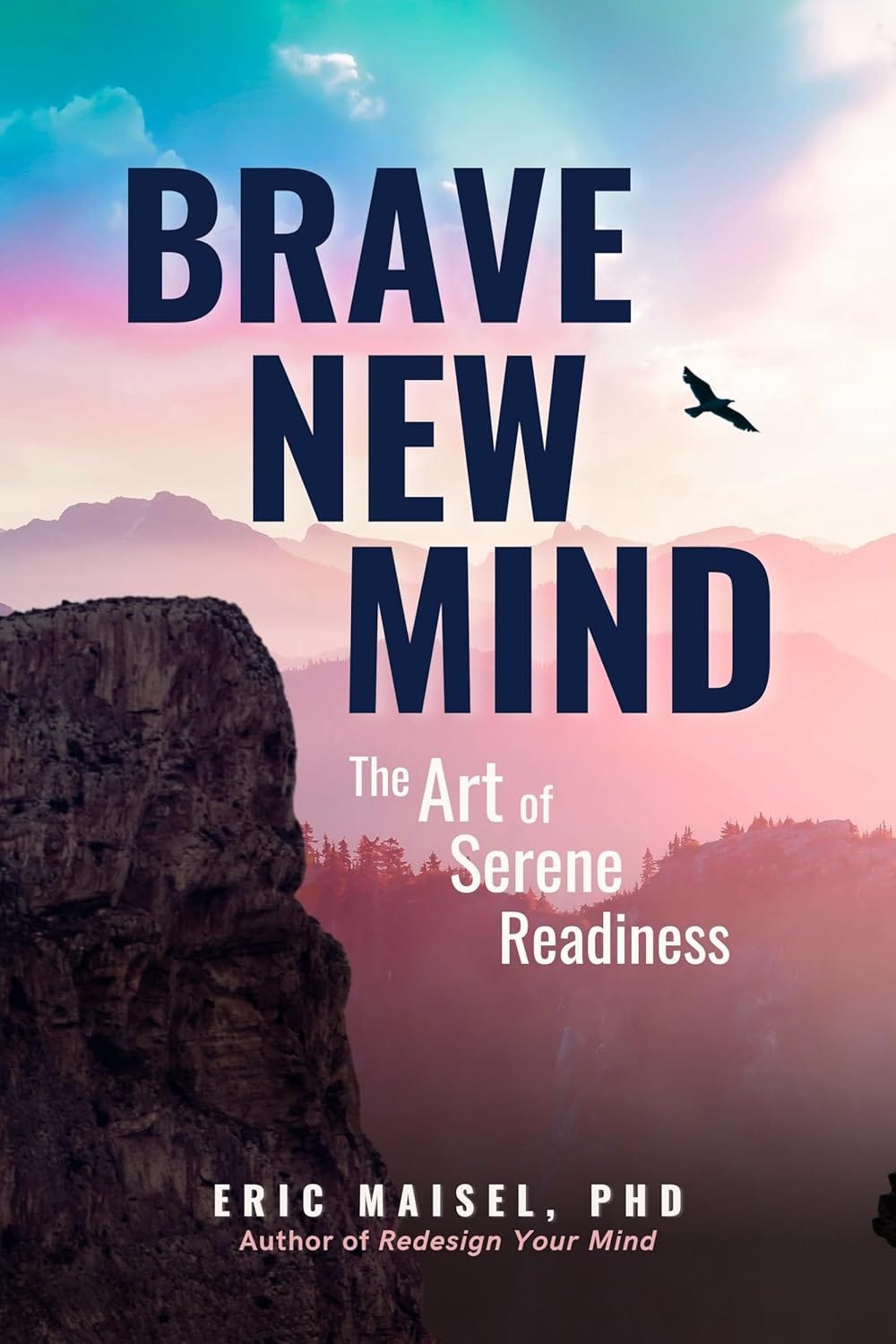
My latest book, Brave New Mind, teaches exactly this sort of preparation, what I’m calling “serene readiness.” My new initiative, The International Association of Creative and Performing Artists, can help too, by paying attention to the psychological, emotional, existential, and practical needs of like-minded people. A third resource is The Reenchantment of Meaning, which will appear late 2026 and which teaches how to use multiple pathways to meaning-making to keep meaning afloat.
If you would like to read it with an eye to providing me with an endorsement, you can get your reading copy by dropping me an email to ericmaisel@hotmail.com.
I suggest that you read Brave New Mind and join the IACPA. They are there to help.
**
+ Join the more than 150 folks who have learned or are learning journal coaching through our powerful Art of Journal Coaching self-study program. Folks love it and you will, too. Come take a look and see if it might be for you.
+ The next round of creativity coaching trainings starts in a week, on February 2. Time to get enrolled! You can learn more about the Introduction to Creativity Coaching training and get enrolled here, and learn more about the Advanced Creativity Coaching training and get enrolled in it here. Many folks take them simultaneously and you may want to, too!
**
[And remember]
My two suggestions to you: grab Brave New Mind and join the IACPA.
Have a safe, healthy, excellent Sunday.
In solidarity,
Eric
What a timely post, Eric! Flexibility and body regulation seem key to living peacefully during turbulent times. I'm enjoying my daily dose of the Buddhist Monks' Walk for Peace. It's my reason for popping onto Instagram daily. I'm ordering your new book now!