Weekly Coaching Tip: Dealing with Ambiguity and Uncertainty
Five Strategies for Coaching Clients Through Life’s Inherent Ambiguity

[Throughout the first half of 2026, I hope to provide you with a robust picture of how existential wellness coaches work with their clients on fundamental existential issues. If you’d like to learn more about the Noble-Manhattan Existential Wellness Coaching Certificate Program that I’ve developed, please visit here. There are scholarships available and all of the resources of the Noble Manhattan family. Come take a look. Today’s offering is Part 9 (and the final) of a mini-series on ambiguity and uncertainty, two issues with which your clients are unquestionably wrestling.]

Ambiguity and uncertainty are constants in human existence. The future is not fully knowable, choices rarely come with guaranteed outcomes, and meaning is something we must construct rather than discover prepackaged.
For many people, this reality generates anxiety, paralysis, or the desperate search for rigid answers. Existential wellness coaches can play a crucial role in helping clients meet these challenges, not by eliminating ambiguity and uncertainty—which is impossible—but by guiding clients toward more resilient, flexible, and meaning-centered ways of engaging with them.
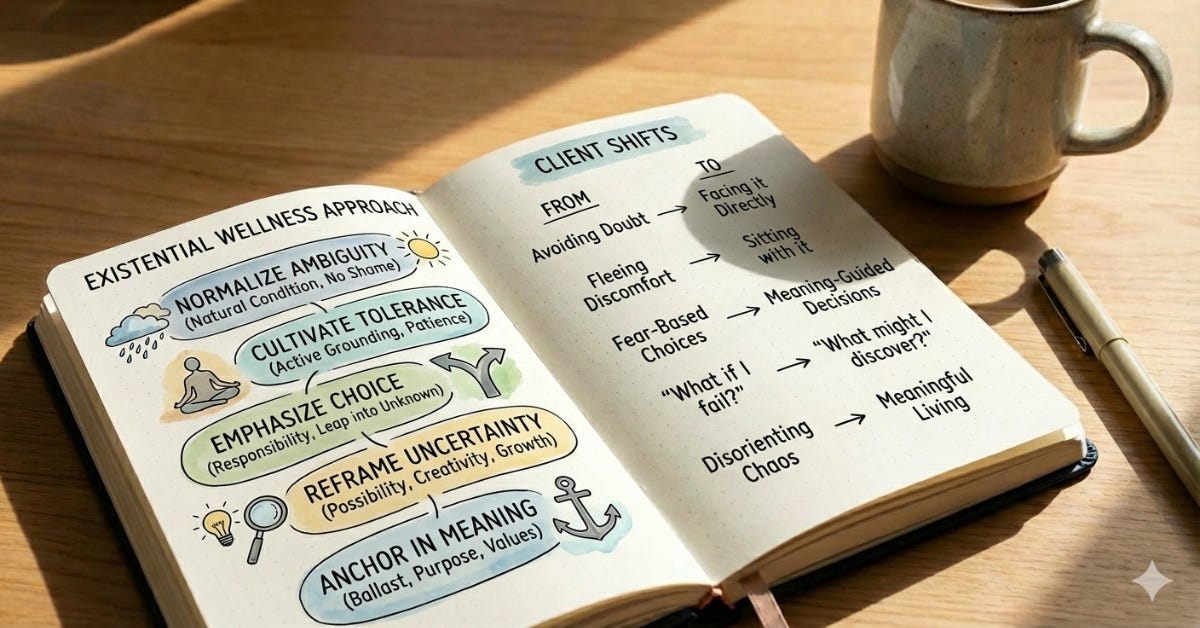
First, existential wellness coaches normalize ambiguity and uncertainty as conditions of life rather than signs of failure or inadequacy. Many clients mistakenly believe that if they were smarter, more disciplined, or better prepared, they could avoid doubt or confusion. Coaches help dismantle this illusion by reminding clients that ambiguity is intrinsic to relationships, careers, and creative work, and that uncertainty accompanies every authentic choice. By naming these conditions as natural, coaches reduce shame and self-blame, making it easier for clients to face them directly.
Second, existential wellness coaches support clients in cultivating tolerance for ambiguity. Tolerance is not passive resignation but an active capacity to remain grounded in situations where answers are partial or evolving. Coaches can use mindfulness practices, reflective journaling, or guided dialogues to help clients sit with discomfort rather than fleeing from it. For example, a client facing a major career shift might learn to hold open multiple possibilities without rushing prematurely into a choice. By practicing this tolerance, clients expand their emotional bandwidth and develop patience with life’s unfolding.
Third, existential wellness coaching emphasizes choice and responsibility in the face of uncertainty. While uncertainty cannot be eliminated, clients still must choose, and every choice involves a leap into the unknown. Coaches help clients recognize that not choosing is also a choice, and that authentic living requires accepting responsibility for one’s decisions, even when outcomes are unpredictable. Rather than offering ready-made advice, existential wellness coaches accompany clients as they clarify values, priorities, and commitments, so that choices are guided by personal meaning rather than by fear or external pressure.
Fourth, existential wellness coaches can help clients reframe uncertainty as a space of possibility. The unknown is not only threatening—it is also the source of creativity, transformation, and growth. An uncertain future means that new meanings and identities can emerge. By encouraging clients to approach uncertainty with curiosity rather than dread, existential wellness coaches help shift perspective from “What if I fail?” to “What might I discover?” This reframing can be especially powerful for creative individuals, entrepreneurs, or anyone in transition.
Finally, existential wellness coaches help clients anchor themselves in self-created meaning. When outcomes are unpredictable and life feels unstable, meaning serves as ballast. Through dialogue, existential exploration, and values clarification, coaches assist clients in articulating purposes that matter to them. With this anchor, clients can face ambiguity and uncertainty not as disorienting chaos but as conditions in which they can still live meaningfully.
FOOD FOR THOUGHT
1. Describe in your own words the difference(s) between ambiguity and uncertainty.
2. Do you struggle with the challenge of life’s ambiguous and uncertain nature in your own life?
3. If you had an important decision to make that was made that much more difficult by the realities of ambiguity and uncertainty, how might you proceed?
4. How might you help clients deal with the ambiguous nature of reality?
5. How might you help clients deal with the uncertain nature of reality?
Next week we start a new mini-series on the existential problem of work. Come on back!
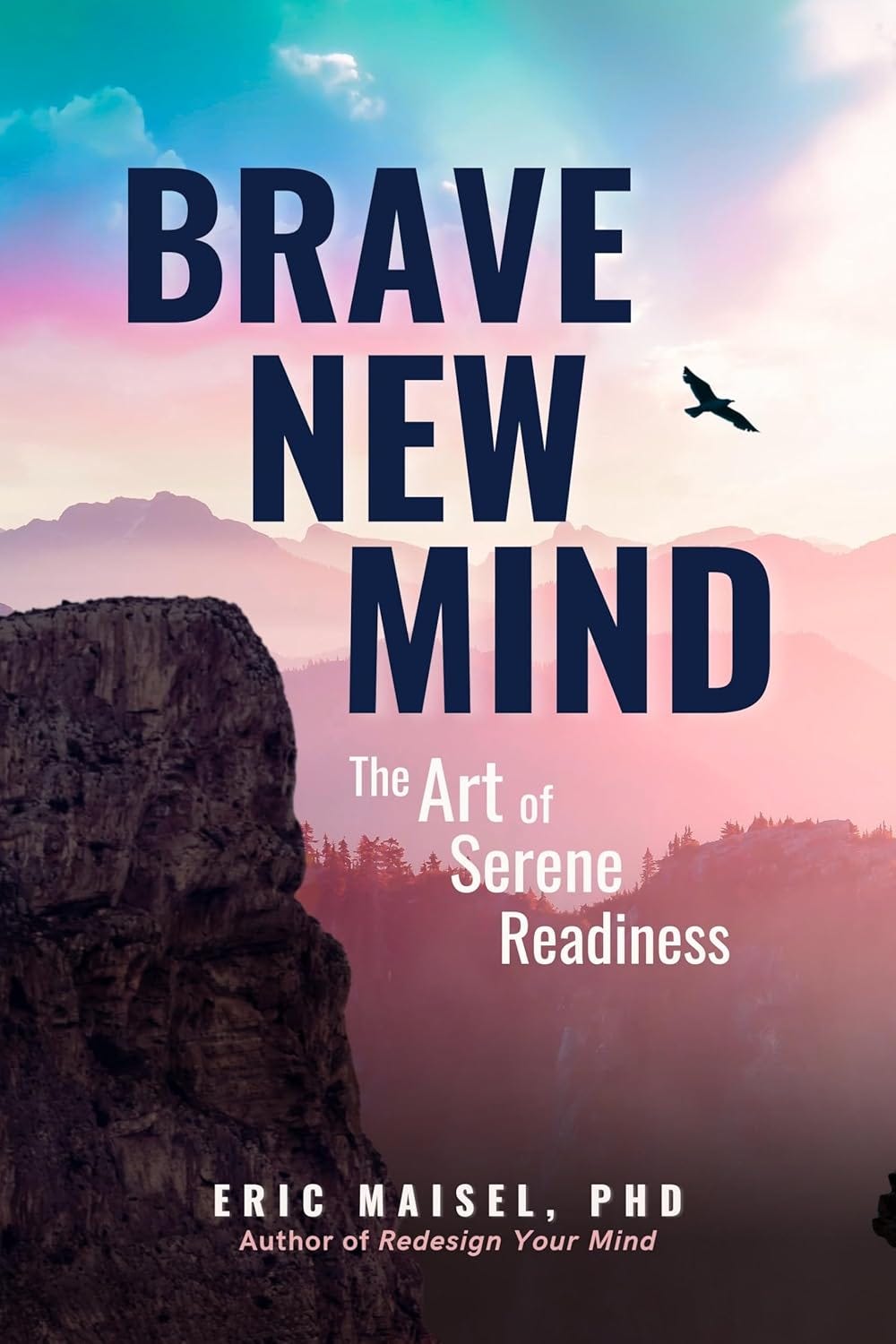
[I hope that you’re enjoying this series. Please check out the Noble Manhattan Existential Wellness Coach Certificate Program and my latest books, Brave New Mind and Night Brilliance.]
Check out Eric Maisel’s transformative courses in collaboration with Noble Manhattan—designed to elevate your coaching journey.

Each week Eric Maisel provides tips on the coaching life. Come to take a look at his three programs with Noble Manhattan Coaching: a Creativity Coach Certificate Program, an Existential Wellness Coach Program and a Relationship Coach Certificate Program.
You can subscribe to Dr. Maisel’s weekly newsletter here, visit him at his site here, and purchase his new resource for coaches, The Exceptional Coach, here
GET YOUR COPY TODAY!