Weekly Coaching Tip: The Difference Between Advice and Self-Inquiry
The Power of the Internal Question


[During the spring and summer of 2026 I’ll be presenting a series of posts on the art and practice of self-coaching. I think you’ll find this series valuable for your own purposes; and, if you work with clients, in your work with clients. Please enjoy! You can always reach me with comments and questions at ericmaisel@hotmail.com]
In the landscape of self-coaching, few distinctions are as important—or as easily overlooked—as the difference between advice and self-inquiry. At first glance, they may seem closely related. Both are attempts to move forward, to solve problems, to feel better, or to make clearer decisions. But in practice, they arise from very different orientations toward the self, and they lead to very different outcomes.

What is Advice?
Advice is directional. It tells you what to do. It points, instructs, recommends, or prescribes. Advice can come from others—friends, experts, books—but it can also come from within. You may have an internal voice that says, “You should just get over it,” or “You need to be more disciplined,” or “The right thing to do is obvious.” This internal advice often carries the tone of authority, urgency, or even impatience
What is Self-Inquiry?
Self-inquiry, by contrast, is exploratory. It does not tell—it asks. It opens space rather than closing it. Instead of directing you toward a predetermined answer, it invites you to discover what is true, relevant, or meaningful for you in this particular moment. Self-inquiry sounds like: “What is actually going on here?” “What am I feeling?” “What matters to me in this situation?” “What feels like the next right step?”
The Appeal—and Limits—of Advice
At a surface level, advice can feel efficient. It promises quick clarity. It reduces complexity to a clear instruction: do this, don’t do that. In moments of confusion or distress, this can be deeply appealing. You want relief, and advice seems to offer a shortcut to resolution.
But the efficiency of advice is often deceptive.
Advice tends to operate from generalization. It draws on what has worked before, what is commonly recommended, or what seems logically sound. While this can be useful in straightforward situations, it often misses the nuances of your actual experience. Your history, your temperament, your values, and the specifics of your current situation may not align neatly with the advice being offered—even if that advice is, in some abstract sense, “good.”
The Burden of “Shoulds”
This is especially true when the advice is internalized. Many people carry around a collection of “shoulds” that guide their /* removed */ “I should be more productive,” “I should be more confident,” “I shouldn’t feel this way.” These statements often masquerade as helpful guidance, but they can create tension, resistance, and even shame. Instead of clarifying the path forward, they can leave you feeling inadequate or stuck.
How Self-Inquiry Works
Self-inquiry works differently. Rather than imposing a solution, it begins with understanding. It assumes that your experience is complex and worthy of exploration. It recognizes that the most useful answers are often not the most obvious ones, and that they cannot be arrived at through force or assumption.
When you engage in self-inquiry, you slow down. You turn your attention inward, not to judge or fix, but to notice and to learn. You might discover that what you initially framed as a problem is actually composed of several layers—conflicting desires, unacknowledged fears, competing values. Advice tends to flatten these layers into a single directive; self-inquiry allows them to be seen.
Example: Procrastination

For example, imagine you are procrastinating on an important project. Advice might say: “Just get started. Stop being lazy.” This may contain a kernel of truth—action does matter—but it bypasses the underlying dynamics. Self-inquiry, on the other hand, might ask: “What am I feeling when I think about this project?” “Is there fear here? Doubt? Perfectionism?” “What feels difficult about beginning?” “What would make the first step more manageable?”
Through these questions, you might uncover that your procrastination is not about laziness at all, but about fear of failure or uncertainty about how to proceed. With that understanding, your response can be more targeted and compassionate. You might decide to break the task into smaller pieces, to seek clarification, or to allow yourself to do a rough, imperfect first draft. The action that emerges from self-inquiry is often more sustainable because it is grounded in reality.
Authority and Autonomy
Another key difference between advice and self-inquiry lies in their relationship to authority. Advice assumes that the answer is already known—either by someone else or by a part of you that claims certainty. It positions you as the recipient of that answer. Self-inquiry, in contrast, positions you as the discoverer. It assumes that the answer is not fully formed and that it will emerge through exploration.
This distinction has important implications for autonomy. When you rely heavily on advice, especially external advice, you may begin to doubt your own capacity to navigate your life. You may look outward for direction, reassurance, or validation. Even when the advice is helpful, this pattern can weaken your sense of agency over time.
Self-inquiry strengthens that agency. It encourages you to trust your ability to engage with your own experience thoughtfully. You are not passively receiving answers; you are actively generating them. This does not mean you reject all advice. Rather, you relate to advice differently. Instead of accepting it wholesale, you might ask: “Does this resonate with me?” “How does this fit with my situation?” “What part of this, if any, feels useful?”
In this way, self-inquiry can include advice without being dominated by it.
Emotional Impact
There is also an emotional dimension to this distinction. Advice, particularly when it is unsolicited or harshly delivered, can feel invalidating. It can suggest that your current experience is wrong or that you should already know what to do. Even your own internal advice can have this effect. When you tell yourself, “You shouldn’t feel this way,” you are, in essence, rejecting your present reality.
Self-inquiry, by contrast, begins with acceptance. Not approval of everything, but acknowledgment. It says: “This is what is happening right now.” From that place, it becomes possible to move forward without the added burden of self-rejection. This acceptance often creates a sense of relief, which in turn makes constructive action more accessible.
When Advice is Useful
It is worth noting that advice is not inherently bad. There are situations where clear guidance is appropriate and useful—learning a new skill, navigating a well-defined problem, or benefiting from someone else’s expertise. The issue is not advice itself, but the overreliance on it, especially in areas that require personal meaning-making, emotional nuance, and value-based decision-making.
Self-Coaching in Practice
Self-coaching, as a practice, leans heavily toward self-inquiry because it aims to cultivate an internal process rather than a set of external answers. It recognizes that your life is not a standardized problem with a universal solution. It is a dynamic, evolving experience that requires ongoing attention and thoughtful engagement.
One way to integrate this understanding into your self-coaching practice is to notice your default tendency. When you face a challenge, do you immediately reach for advice—either from others or from your own internal “shoulds”? If so, you might experiment with pausing and shifting into inquiry.
Instead of asking, “What should I do?” you might ask, “What is this situation asking of me?” Instead of saying, “I need to fix this,” you might say, “I want to understand this.” These subtle shifts in language can lead to significant shifts in experience.
Conclusion
Over time, you may find that self-inquiry leads to answers that feel more aligned, more nuanced, and more genuinely your own. These answers may not always be simple or comfortable, but they tend to carry a sense of rightness—a feeling that they fit your life as it is actually being lived.
Ultimately, the difference between advice and self-inquiry is the difference between being told and discovering, between following and understanding, between imposing and uncovering. In the context of self-coaching, this difference matters deeply.
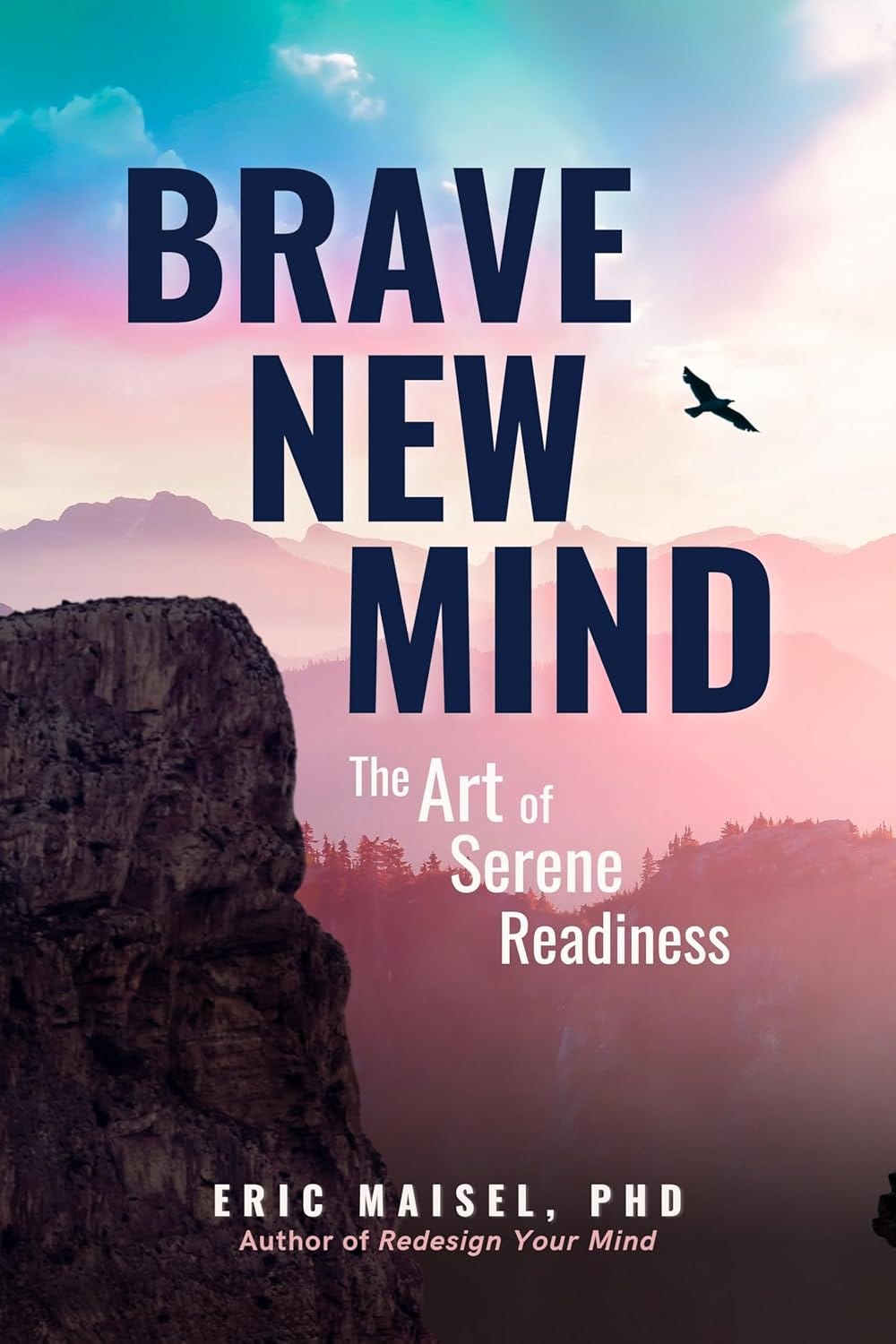
[I hope that you’re enjoying this series. Please check out the Noble Manhattan Existential Wellness Coach Certificate Program and my latest books, Brave New Mind and Night Brilliance.]
Check out Eric Maisel’s transformative courses in collaboration with Noble Manhattan—designed to elevate your coaching journey.

Each week Eric Maisel provides tips on the coaching life. Come to take a look at his three programs with Noble Manhattan Coaching: a Creativity Coach Certificate Program, an Existential Wellness Coach Program and a Relationship Coach Certificate Program.
You can subscribe to Dr. Maisel’s weekly newsletter here, visit him at his site here, and purchase his new resource for coaches, The Exceptional Coach, here
GET YOUR COPY TODAY!
With Brave New Mind, Eric Maisel delivers a compelling and timely guide for navigating mental health in our anxiety‑fueled age. Its blend of clarity, depth, and usable tools creates a powerful toolkit—not just for surviving stress, but for forging a more calm, purposeful, and resilient way of living.
It’s not about seeking escape; it’s about crafting a mind equal to the demands of today. If you’re ready to face fear, anxiety, and uncertainty with presence and meaning, this is a book to lean into.