Weekly Coaching Tip: The Postmodern Take

[Throughout the first half of 2026, I hope to provide you with a robust picture of how existential wellness coaches work with their clients on fundamental existential issues. If you’d like to learn more about the Noble-Manhattan Existential Wellness Coaching Certificate Program that I’ve developed, please visit here. There are scholarships available and all of the resources of the Noble Manhattan family. Come take a look. Today’s offering is Part 2 of a mini-series on ambiguity and uncertainty, two issues with which your clients are unquestionably wrestling.]

Postmodernism deepened the philosophical role of ambiguity by challenging foundationalism, binary thinking, and fixed meanings. Jacques Derrida’s concept of différance emphasized how meaning is always deferred and context-dependent. Language, according to Derrida, is inherently ambiguous—never fully present or stable.
Michel Foucault, too, explored the ambiguity of power and knowledge, showing how systems of classification and discourse shape what we take as truth. Rather than imagining that ideas could be pinned down, Foucault traced the shifting, often contradictory ways in which meaning and identity are constructed.
In contemporary philosophy, ambiguity is no longer just a problem to be solved but a condition to be understood and navigated. Feminist philosophers like Luce Irigaray and Gloria Anzaldúa have explored ambiguity as a site of resistance and multiplicity, especially in gendered and cross-cultural identities.
Phenomenologists, existential therapists and existential wellness coaches see ambiguity as intrinsic to choosing, perception, and emotional life. Philosophers of language, meanwhile, treat ambiguity not only semantically (as in polysemy or vagueness) but pragmatically—as something speakers manage contextually, and which literature and poetry may intentionally cultivate.
In contemporary existential coaching, ambiguity is not a technical glitch—it’s part of the terrain. Coaches like Emmy van Deurzen and Mick Cooper emphasize the multi-layered, paradoxical nature of existence. Van Deurzen speaks of clients needing to navigate multiple life dimensions (physical, social, personal, spiritual), each of which comes with its own tensions and ambiguities.
Rather than aiming for premature resolution, the existential coach accompanies the client in “staying with” their experience. When a client asks, “Should I leave this relationship or stay?”, the answer is rarely clear-cut. Existential coaching provides a framework for exploring how both choices can be right, wrong, or necessary in different ways—in other words, ambiguous.

To be human is to be suspended in ambiguity. We live, breathe, strive, suffer, and love within a framework that resists definitive interpretation. Philosophers, mystics, and poets have tried for centuries to decode what it means to exist—but every answer has only led to more questions. This ambiguity is not incidental to life; it is life. To exist is not merely to occupy space and time—it is to dwell in a web of contradictions, polarities, and shifting meanings.
Consider the client who asks, “Am I on the right path?” An existential wellness coach does not reply with a checklist but with questions: What does “right” mean to you? Who are you becoming on this path? What fears are shaping the question itself? The ambiguity is not an obstacle but the raw material of exploration.
To live existentially is not to eliminate ambiguity but to befriend it. It is to replace the desire for certainty with the courage to choose anyway. It is to accept that meaning, freedom, identity, and truth are not static nouns but dynamic verbs—always in flux, always negotiated.
In a world that pressures us toward quick fixes, binary thinking, and false clarity, honoring the ambiguity of existence is a radical act. It is a stance of maturity, of presence, of depth. We do not need to solve life to live it meaningfully. We need only to engage it—responsively, honestly, and compassionately. Or, as Maurice Merleau-Ponty put it in Phenomenology of Perception, “The ambiguity of reality is not a defect, but the condition of its truth.”
More next week!
[I hope that you’re enjoying this series. Please check out the Noble Manhattan Existential Wellness Coach Certificate Program and my latest books, Brave New Mind and Night Brilliance.]
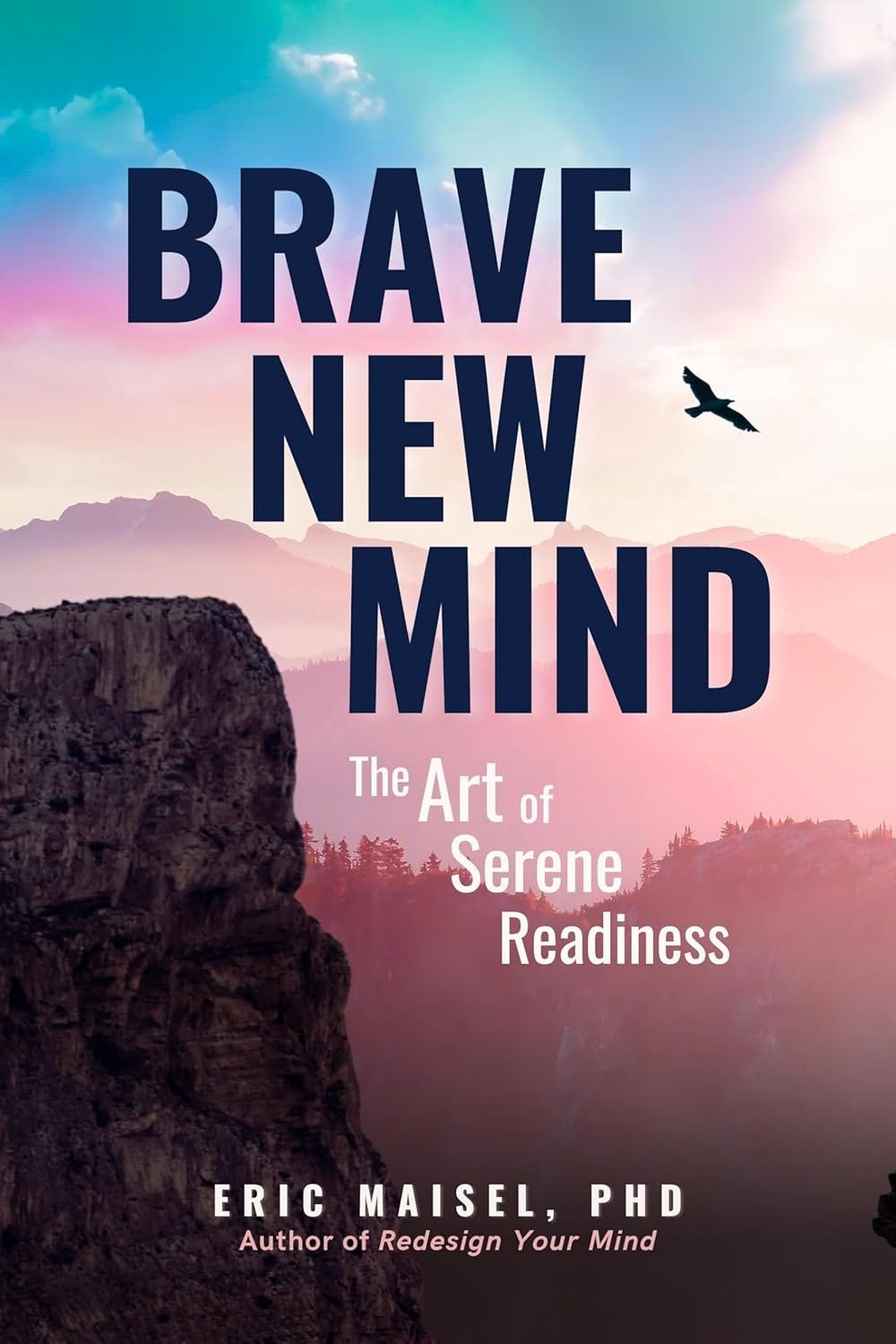
Get these wonderful gifts for preordering Brave New Mind!
Just preorder your copy (at any one of the following locations) and then grab your gift. It’s all on the honor system. Preorder, select, and enjoy!
Check out Eric Maisel’s transformative courses in collaboration with Noble Manhattan—designed to elevate your coaching journey.